About Osmosis
Built to solve the depth data problem
We started Osmosis because the liquidity data that research desks and treasury teams needed did not exist in a form they could actually use.
Why we built this
The standard way to assess on-chain liquidity before a trade is to check TVL and 24-hour volume. Neither tells you how much of a specific token pair you can buy or sell before the price moves by 1%. That number, the depth curve, requires reading actual pool state at the current block height and computing the impact curve from the bonding function.
Block explorer exports work, but they are snapshots. By the time your analyst has run the query, formatted the data, and pulled it into their model, the depth reading is three to six hours old. In fast-moving on-chain markets, that staleness is the difference between a slippage estimate that holds and one that was only accurate at 9 AM UTC.
Osmosis continuously indexes pool state across the five chains where most DeFi volume flows, computes the depth curve in real time, and delivers the data in formats that fit existing research workflows: a dashboard for visual queries, a CSV export for bulk analysis, and a REST API for integration into execution systems.
We are bootstrapped, Singapore-based, and focused on the segment of the market that cares most about execution quality: professional research desks and treasury teams managing significant on-chain exposure.
The team
Three people who spent years watching research desks fight with inadequate liquidity data and decided to fix it.
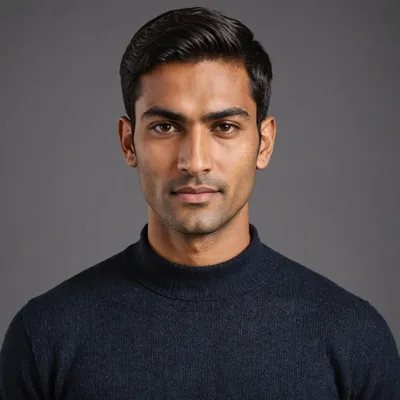
Sunny Aggarwal
Co-founder and CEO
Spent years building on-chain research tooling from scratch, including depth curve computation from raw block explorer exports. Saw the gap between what analysts were cobbling together manually and what a reliable depth data service could deliver, and started Osmosis to close it.

Elena Mok
Co-founder and Head of Research
Background in quantitative research on DeFi execution costs, with a focus on cross-chain liquidity modeling and slippage estimation. Leads Osmosis's research methodology, including the depth computation model and slippage estimation approach used across all five indexed chains.

Fabian Holtz
Lead Engineer
Backend engineer focused on blockchain data infrastructure and distributed event-processing systems. Designed the continuous indexing pipeline that processes pool-state events across Osmosis DEX, Ethereum, Arbitrum, Polygon, and Curve in near real time, with the reliability requirements that production research desks demand.
Get in touch
We are early access only and review requests within two business days. For enterprise coverage discussions and custom integrations, reach us directly.
Singapore 068914